“Build a little tool for this campaign” gives a developer a direction. It doesn't give marketing and development a shared way to decide whether the result is right.
An acceptance check does. It names an example input and the behavior both sides expect. The first useful check can be small enough to understand without opening a technical manual.
That is a practical bridge for a marketing team bringing development capability closer to home: one agreed example travels with the brief, the proposed change and the review.
Choose a result, not a vague feature
Imagine a fictional team building an enquiry-routing helper. It is not connected to a live form or customer database. The example asks a visitor to choose the kind of help they need.

AI-generated editorial illustration—not product hardware or a screenshot.
Marketing agrees that “support” should show the support route. A missing choice should ask for clarification rather than invent a destination. Development agrees that this is the behavior to check.
That is more specific than “make the assistant helpful.” It also makes uncertainty visible: a request the helper cannot interpret should not quietly become a confident answer.
Before building, decide who owns the wording and who owns the routing rule. An AI-generated first draft doesn't settle either responsibility.
Carry the example through the change review
The documented Noodle Build workflow includes proposed edits, project files and preview. Use those surfaces to follow the agreed behavior into the implementation.
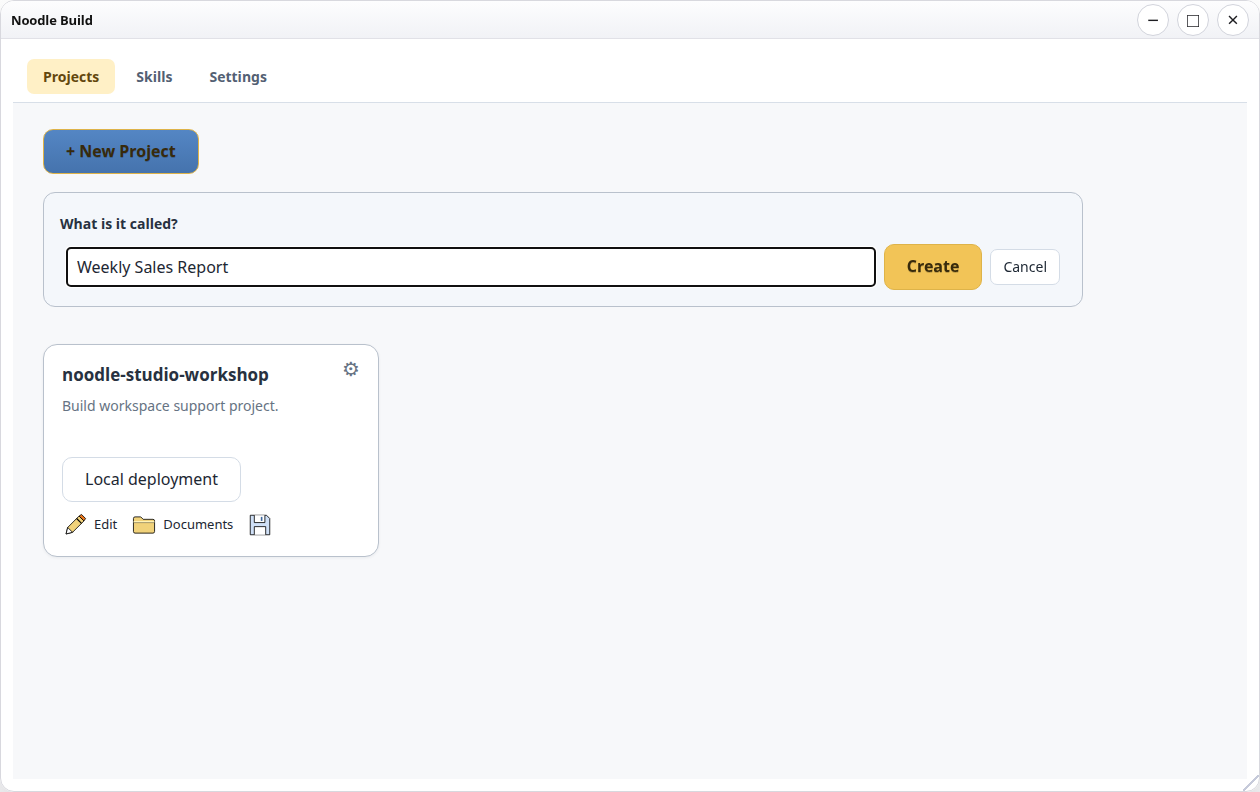
Creating an example project does not run a flow. This screenshot does not demonstrate the fictional routing helper described in the article. Controlled test session; fictional examples.

AI-generated editorial illustration—not product hardware or a screenshot.
Ask which files changed and whether the generated explanation matches those changes. Keep the example input visible during review. If the helper chooses a different route, resolve the difference before adding more options.
A readable explanation is not a test result. AI can invent a reasonable-sounding routing rule or miss the blank-input case. Someone with technical responsibility still needs to check the behavior.
Save and preview deliberately
Saving project work and running a preview are different actions. The documented preview engine can run loaded flows, including timers, so the team should understand what the example will do before starting it.
Use fictional inputs. Do not connect a real lead form simply to make the demonstration feel authentic. Browsing the connector catalog describes possibilities; it does not execute an integration or authorise account access.
Check the ordinary selection, the missing selection and the wording shown to the visitor. The marketer can challenge the meaning while the developer checks the implementation. Neither should have to guess what the other considers a pass.
Hand over a version, not a memory
When the example behaves as agreed, record the exact copy and source version that were reviewed. Include the expected result and the outstanding decisions about hosting, maintenance and release.
Bringing development in-house is partly about making that evidence accessible to the team that owns the campaign. It doesn't mean every marketer must become a developer or that AI replaces a technical reviewer.
The current Build workspace opens project source without automatically starting or deploying an app. Its project-creation screen is a place to begin the example, not evidence that the proposed routing behavior works. Preview behavior is not a public deployment, and remote delivery remains unfinished.
The first win to look for is a shared understanding of one result—not an unsupported claim about conversions or time saved.
For the editorial side of the same handoff, see how StoryShellOS moves working content through review. Reviewing copy is not a substitute for checking the tool it describes.
Want development closer to your marketing team, but not comfortable trusting a black box? Let's grab a coffee and talk through the checks and handoffs a first project would need.