There is a lot of excitement right now around AI agents, digital workers, agent teams, and AI operating systems.
Honestly, I understand why.
For most people, using AI still looks like this:
- open a chat;
- explain the task;
- copy the answer;
- open another application;
- paste it in;
- fix the formatting;
- open another chat;
- explain the next step all over again.
At some point, the human becomes the least efficient part of the AI workflow.
Not because the human is doing anything wrong.
Because the human is being forced to act as the project manager, context carrier, quality-control department, integration layer, and copy-and-paste intern all at the same time.
That is why digital workers and orchestration matter.
But we need to be careful not to describe an entire AI operating environment as simply a collection of agents connected to a few tools.
Agents are important.
They are not the whole system.
Start with the people
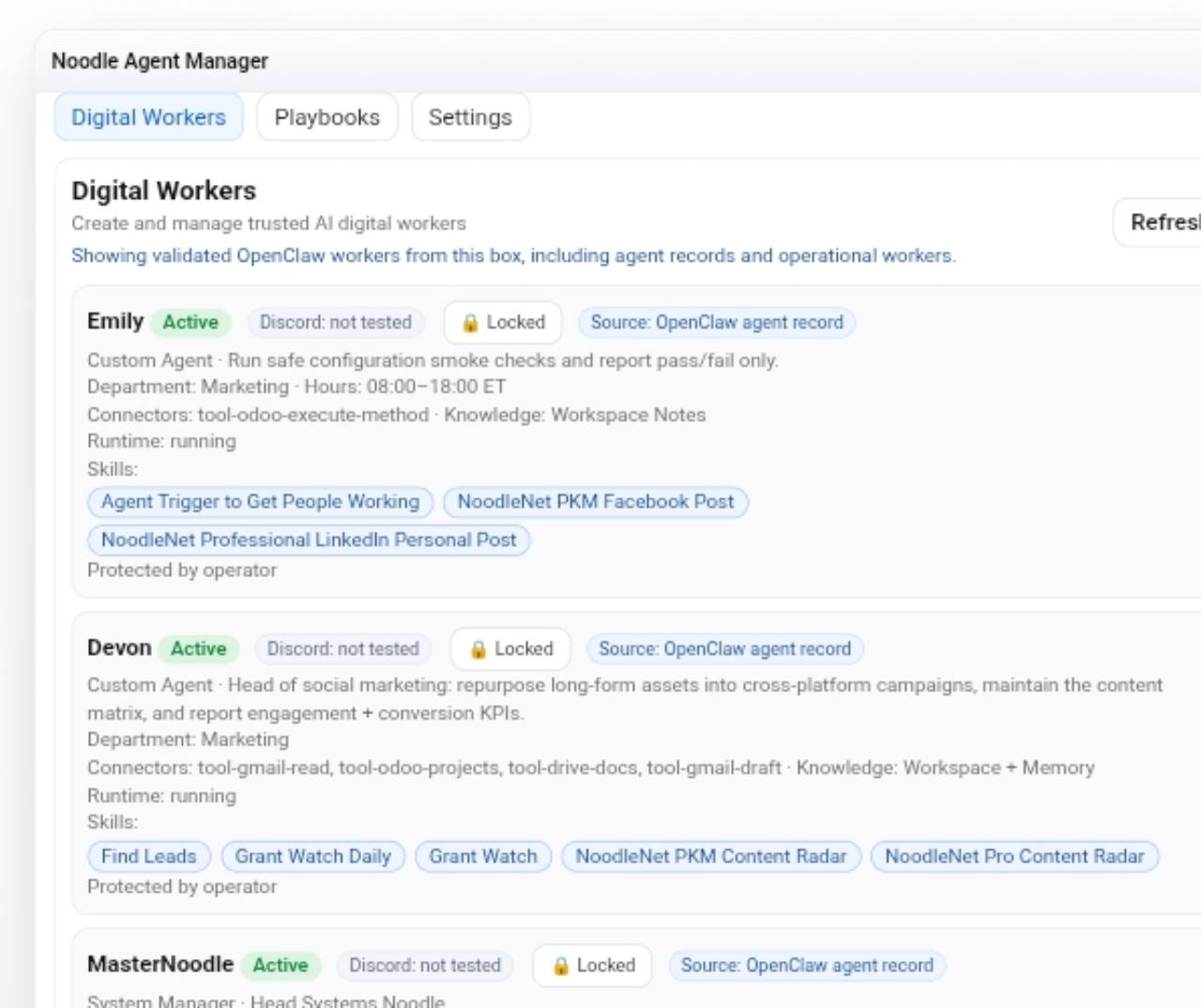
The easiest way to understand the NoodleNet approach is to start with the digital workers.
A digital worker has a role.
It may belong to Marketing, Operations, Sales, Research, Finance, or another part of the business.
It may have responsibility for reviewing projects, preparing content, finding opportunities, checking documents, or coordinating work.
That worker is not simply a prompt with a person's name attached to it.
It has defined responsibilities, approved knowledge, access boundaries, available tools, and a specific place inside the operation.
In other words, the worker answers the question:
Who owns this work?
That is the first layer.
Then give the workers skills
Workers need capabilities.
A marketing worker might know how to turn a long-form article into a LinkedIn post.
A sales worker might know how to review a discovery call.
An operations worker might know how to inspect a project for stalled tasks.
A finance worker might know how to compare an invoice against an approved purchase order.
Those are skills.
Skills are usually more specific than the worker itself. They may be tied to a business method, an application, a workflow, or a particular kind of task.
This distinction matters.
The worker is the person.
The skill is something that person knows how to do.
That gives the system more flexibility than creating a brand-new agent for every tiny capability.
A single worker can develop multiple skills.
A useful skill can also be assigned to more than one worker when appropriate.
Plays organize the work
Having capable workers is not enough.
Someone still needs to know when the work should happen, what starts it, what steps are involved, and what a successful result looks like.
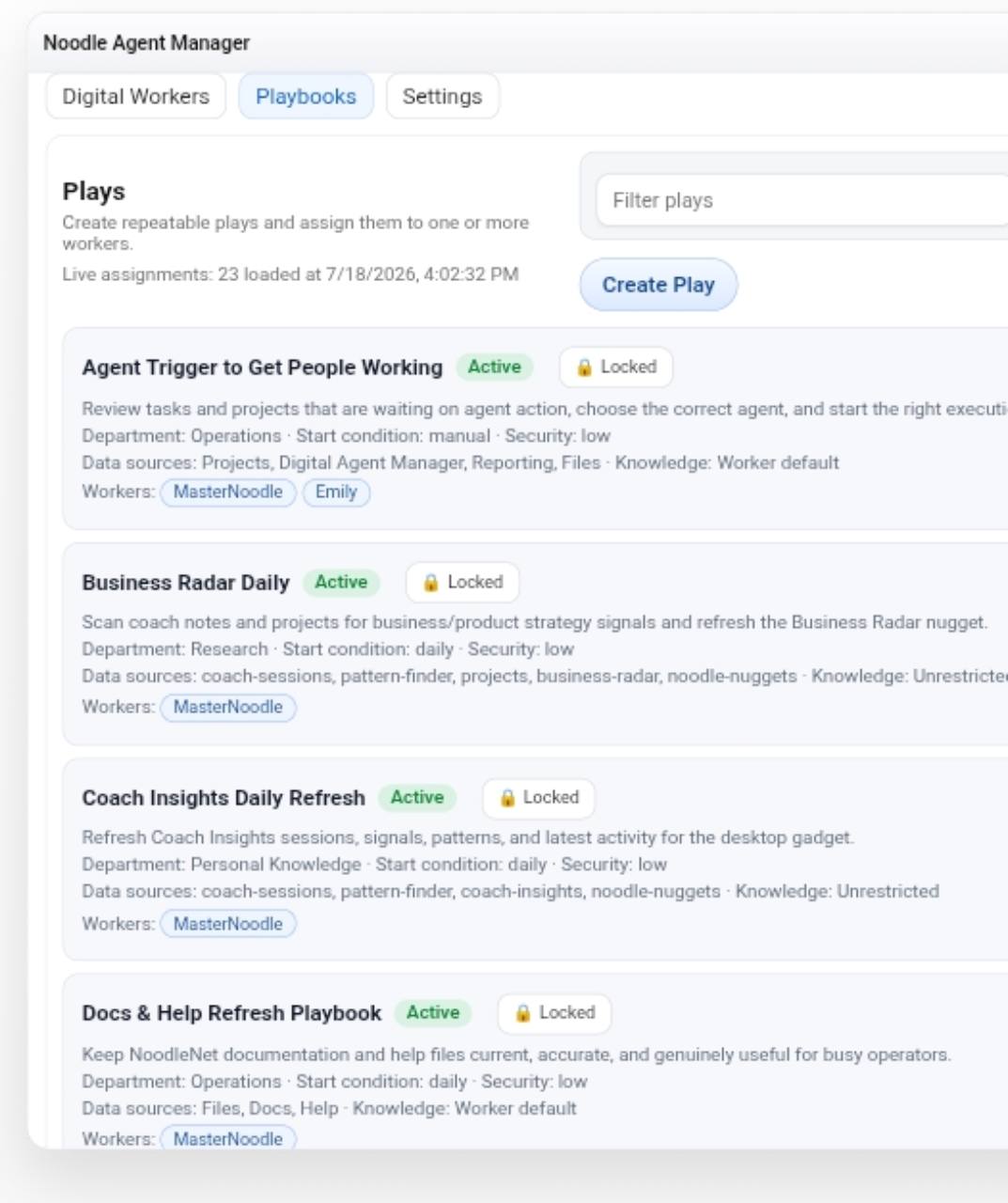
That is the job of a play.
A play is a repeatable operating procedure.
It might run manually.
It might run each morning.
It might begin when a new document arrives, a project changes status, or an opportunity appears in the CRM.
You can think of it a little like a customizable cron job, except it can include business context, AI reasoning, worker assignments, approvals, and decision points.
For example, a daily operations play might:
- review current projects;
- identify tasks waiting for AI action;
- determine which worker should handle each task;
- start the correct workflow;
- record what happened;
- escalate anything that requires human judgment.
The play answers:
When should the work happen, and how should it move through the business?
Connectors are not the execution layer
This is where an important distinction often gets missed.
A connector gives AI access to another system.
That is valuable.
MCP servers, APIs, webhooks, and application plugins can allow a worker to reach WordPress, Gmail, a CRM, an ERP, a file system, or another business platform.
But access alone does not make the work dependable.
A connector answers:
Can the system communicate with this application?
The execution layer answers much harder questions.
- Is this worker authorized to make the change?
- Is the data complete?
- Does the action require approval?
- Did the update actually succeed?
- Can the system retry safely?
- Will retrying create a duplicate?
- What happens when three steps complete and the fourth one fails?
- Can the process resume from the failure point?
- Was the final result verified?
- Where is the activity recorded?
That is the difference between making a tool call and operating a business process.
Connectors reach the tools.
The execution layer manages the work.
Execution needs a scheduler, not just a button
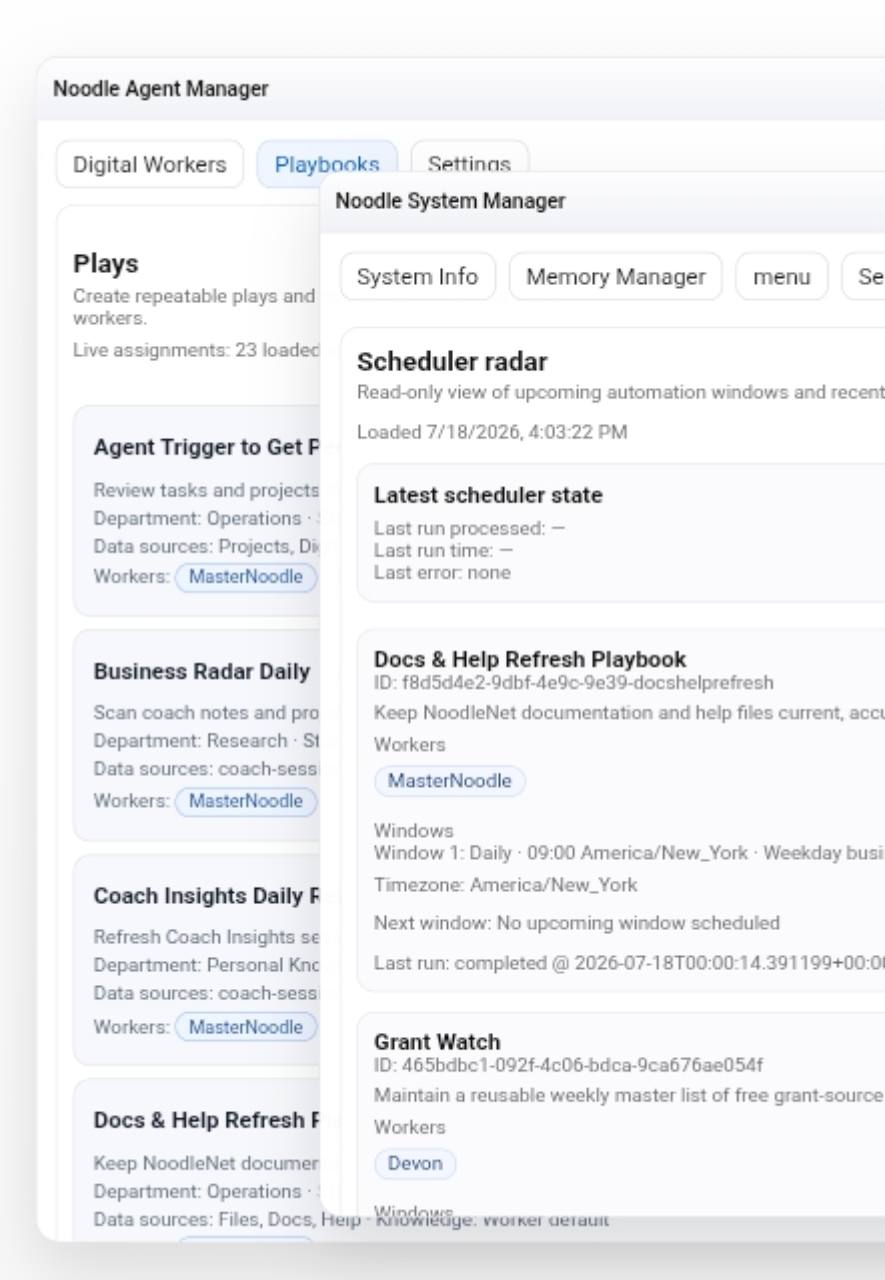
This is where the operating system idea starts to become real.
A useful AI environment needs to know what is scheduled, what is running, what recently completed, and what needs attention.
That matters because business work does not happen in one perfect straight line.
Some tasks run daily.
Some depend on a file showing up.
Some need a manager to approve the next step.
Some fail halfway through because a source system was down, an input was missing, or a human changed the requirements after coffee number three.
The system needs to see the difference between "nothing happened," "the work is waiting," "the work failed," and "the work completed and was verified."
Otherwise you do not have an operating system.
You have a very enthusiastic button.
Knowledge gives the work meaning
Digital workers should not operate only from whatever a general AI model happens to know.
They need the right business context.
That might include approved documents, policies, project records, customer information, prior decisions, standard procedures, corrections, or role-specific memory.
Just as importantly, every worker should not automatically see everything.
A useful operating environment needs to understand which knowledge belongs with which worker and which process.
The sales worker may need access to opportunity records.
The marketing worker may need approved brand materials.
The finance worker may need pricing and purchasing policies.
The system should assemble the context required for the job without turning the entire company knowledge base into one enormous bucket.
That bucket sounds convenient until someone asks why the marketing worker is summarizing payroll policy. Then suddenly "easy access" gets less adorable.
The human still runs the business
None of this means removing the human.
It means moving the human to the right place.
The human should define the destination, set the boundaries, approve sensitive actions, handle exceptions, and provide judgment.
The human should not have to manually carry every piece of work between five chat windows and seven applications.
That is not human-in-the-loop.
That is human-as-the-loop.
A good AI operating environment reduces the repetitive coordination while keeping people in control of the decisions that matter.
Logs make the system trustworthy
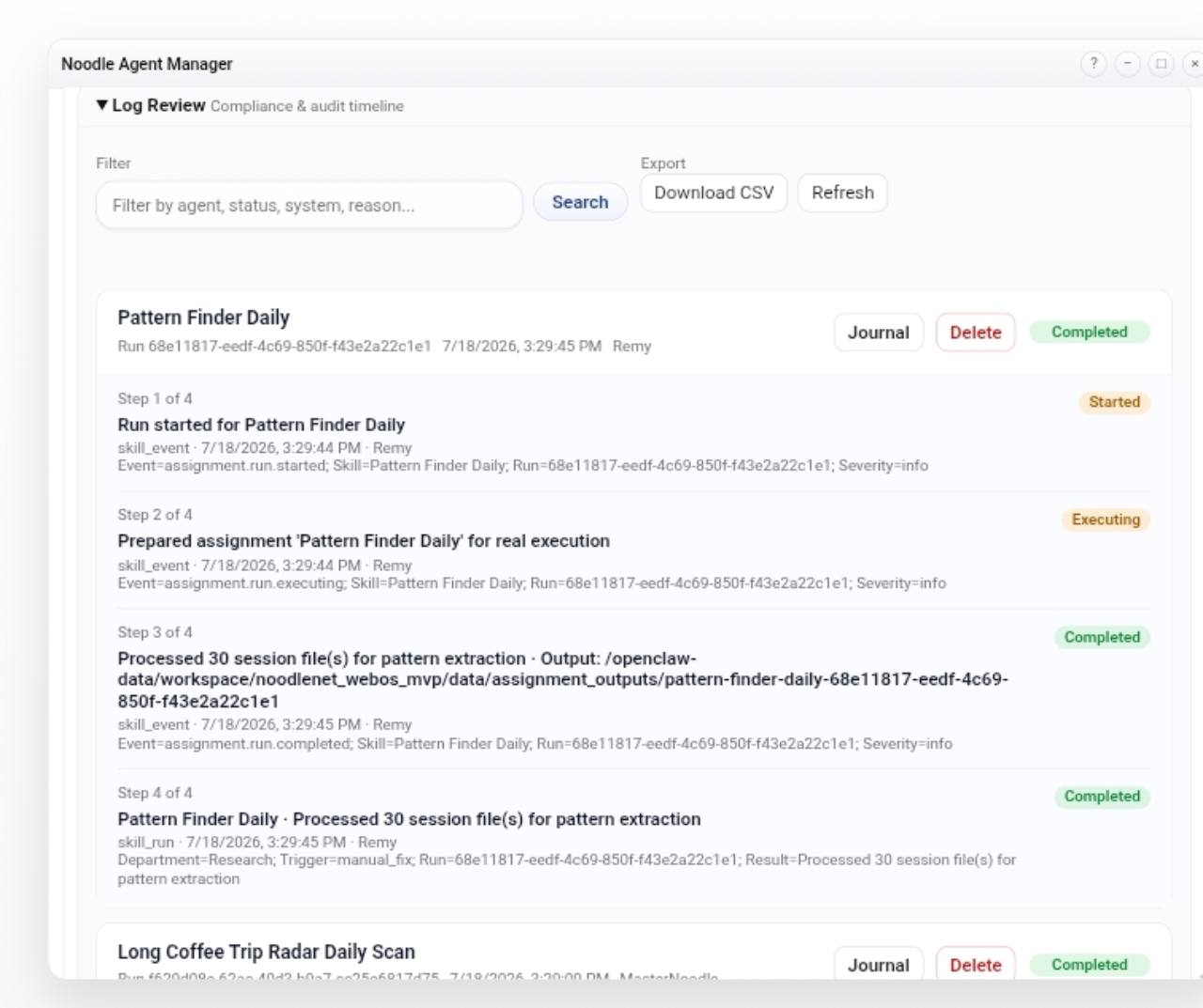
If AI work is going to affect real operations, the system needs a memory of what happened.
Not vibes.
Logs.
Who ran the play?
Which worker handled it?
What steps completed?
What failed?
What was retried?
What output was produced?
What still needs a person?
This is not glamorous, which is usually how you know it matters.
Logs, validation, and review history are what turn "the AI said it did something" into "the system shows what happened, when it happened, and whether it worked."
That is a very different level of trust.
The hierarchy matters
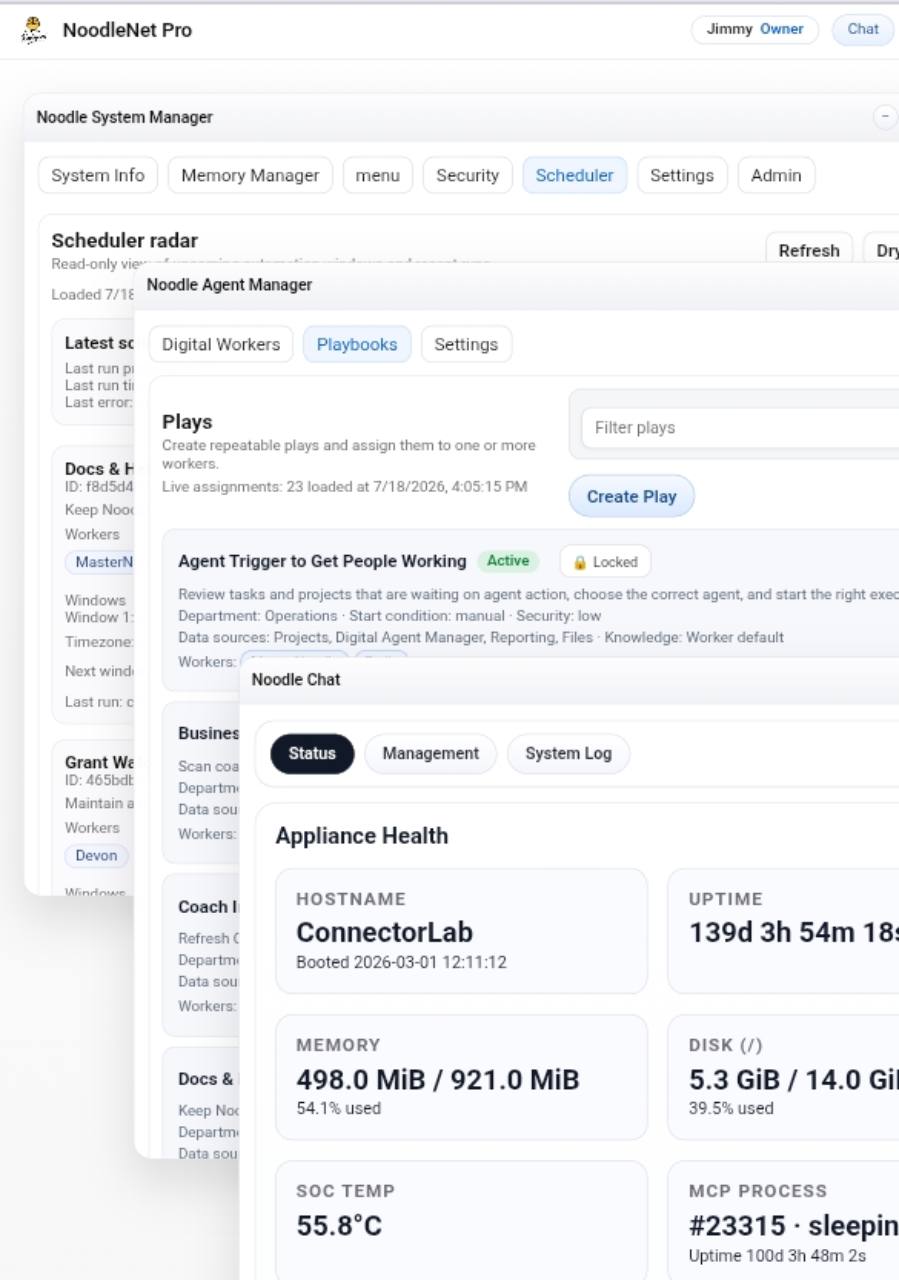
The model becomes easier to understand when it is viewed as a hierarchy:
- digital workers own responsibility;
- skills give those workers capabilities;
- plays organize when and how work happens;
- execution layers make the work reliable across real systems;
- connectors provide access to those systems;
- knowledge and models provide context and intelligence;
- approvals, validation, and logs keep the operator in control.
That is much closer to how a real organization functions.
People have roles.
People develop skills.
The organization has procedures.
The systems provide access.
The operating environment keeps the work moving.
Why this matters
AI models will continue to improve.
Agent-building tools will become easier.
Connectors will become more common.
Prompt libraries and agent packages will be everywhere.
That is good news.
But the long-term value will not come from having the largest collection of named agents.
It will come from building an environment where digital workers can operate responsibly inside the actual business.
The opportunity is not simply to make AI do more.
It is to make AI work organized, observable, controlled, and useful.
That is the world I believe we are moving toward.
And that is the world NoodleNet is being built for.